
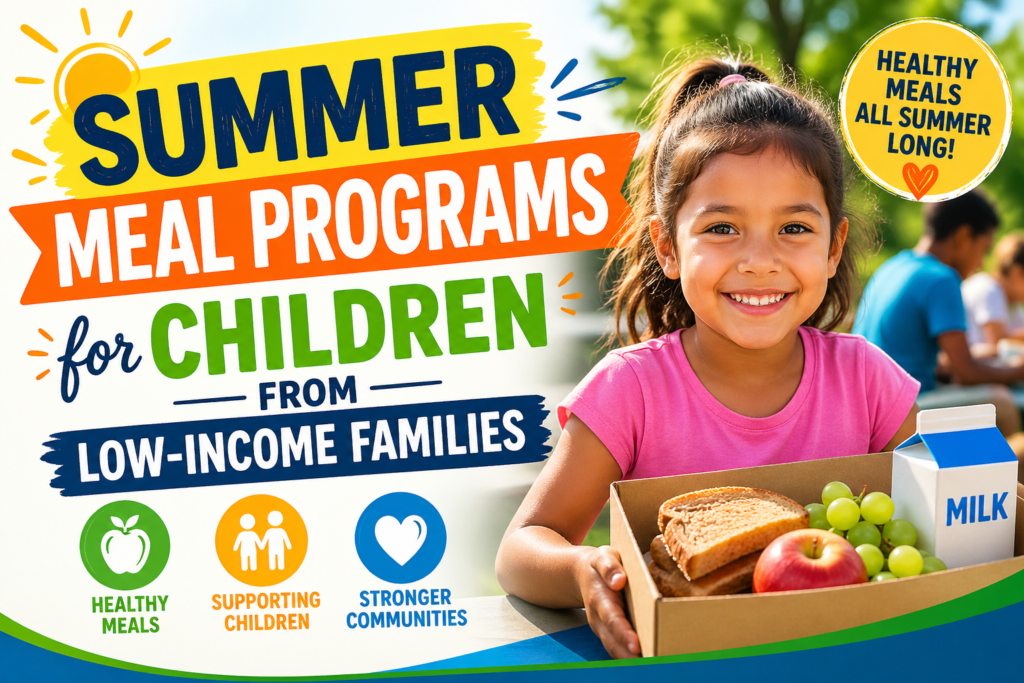
During the school year, millions of children depend on free or reduced-price school meals. But when schools close for summer, many low-income families struggle to provide enough food. To address this gap, governments and community organizations run summer meal programs that offer free, healthy food to children.
These programs are especially important because proper nutrition helps children grow, stay healthy, and return to school ready to learn.
What Are Summer Meal Programs?
Summer meal programs are free food assistance programs that provide meals and snacks to children during school vacations.
The main program in the United States is the Summer Food Service Program (SFSP), run by the U.S. Department of Agriculture (USDA). It ensures children continue to receive nutritious meals even when school is not in session.
👉 Official USDA page: Learn about Summer Meals (SUN Meals)
Key Summer Meal Programs Available
1. Summer Food Service Program (SFSP) / SUN Meals
This is the largest and most widely used summer feeding program.
- Provides free meals and snacks to children
- Available at schools, parks, libraries, and community centers
- Open to all children age 18 and under
Meals are served at approved sites in low-income areas where many families qualify for assistance.
👉 Find more details: SFSP Overview (USDA ERS)
2. SUN Bucks (Summer EBT Program)
This newer program helps families buy groceries.
- Provides about $120 per child for summer food
- Funds are loaded onto an EBT card
- Can be used to buy groceries like fruits, vegetables, and milk
This is helpful for families who cannot easily travel to meal sites.
3. Seamless Summer Option (SSO)
This program is used by schools that already serve meals.
- Operates like school lunch programs
- Available during summer school or vacation periods
- Easier for schools to manage with less paperwork
4. Non-Congregate (To-Go) Meal Options
In some rural areas:
- Families can pick up meals or receive deliveries
- Meals do not need to be eaten on-site
- Helps children in remote locations access food
Who Is Eligible?
Most summer meal programs are designed for low-income families, but many sites are open to all children.
General eligibility rules:
- Children 18 years or younger can receive free meals
- Adults with disabilities enrolled in school programs may also qualify
- Meal sites are usually located in areas where:
- At least 50% of children are from low-income families
At many open sites, no application, ID, or registration is required—children can simply show up and eat.
Where Meals Are Provided
Meals are offered at safe, accessible community locations such as:
- Public schools
- Parks and playgrounds
- Libraries
- Churches and faith centers
- Community centers
- Housing complexes
These locations are chosen to make it easy for children to access food during summer.
What Types of Meals Are Served?
Meals must meet federal nutrition guidelines and often include:
- Breakfast, lunch, or both
- Milk, fruits, vegetables
- Whole grains and protein (like beans, eggs, or meat)
Programs focus on healthy, balanced meals, not just calories.
How to Apply or Get Meals
For Families (Children)
In most cases, you do not need to apply.
Steps:
- Find a nearby meal site
- Visit during serving hours
- Receive free meals on-site
👉 Use this official tool: Find Summer Meal Sites Near You
For Organizations (Schools, Churches, Nonprofits)
Groups can apply to run a summer meal program if they:
- Are nonprofit or government organizations
- Can manage food service operations
- Follow program rules and safety standards
👉 Application info: SFSP Application Guidance
Why Summer Meal Programs Matter
These programs play a key role in fighting child hunger.
Benefits include:
- Prevents summer hunger and malnutrition
- Supports child growth and health
- Helps children stay focused and ready for school
- Reduces financial pressure on low-income families
Research shows children without regular meals may struggle academically and physically, making these programs essential.
Common Challenges
Even though these programs are helpful, some families face barriers:
- Lack of transportation to meal sites
- Limited awareness of programs
- Fewer sites in rural areas
Programs like SUN Bucks and meal delivery options are helping solve these problems.
Final Thoughts
Summer meal programs are a lifeline for low-income families. They ensure children do not go hungry when school is closed and continue to receive the nutrition they need.
