
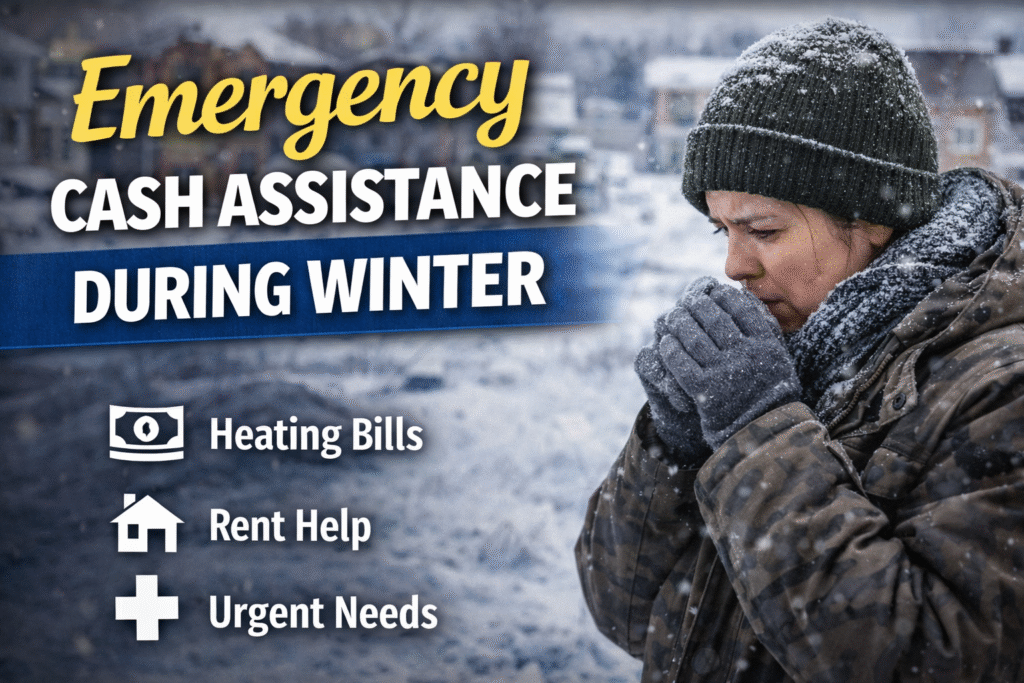
Winter can be a difficult time for many people. Cold weather increases heating bills, adds urgent needs, and can lead to financial emergencies. For families and individuals who struggle to pay bills, emergency cash assistance programs can help cover urgent costs like heating, food, shelter, and medical needs.
This article explains how emergency winter cash help works and where to find it.
What Is Emergency Cash Assistance?
Emergency Cash Assistance means short-term financial help given to people who are facing an urgent need. During winter, common reasons people need emergency cash include:
- High heating bills
- Lost income
- Emergency repairs
- Medical expenses
- Risk of eviction or utility shut-off
These programs do not usually provide long-term support, but they can help people get through a crisis situation.
Read More: Federal Utility Bill Grants for Low-Income Families
Who Qualifies for Winter Emergency Cash Help
Eligibility for emergency cash assistance during winter varies by program, but common factors include income level, household size, residency, and proof of crisis. Many programs prioritize:
- Low-income households
- Families with children
- Seniors aged 60 or older
- People with disabilities
- Individuals facing eviction or utility shutoff
- Those experiencing job loss or medical emergencies
Importantly, immigration status requirements differ by program. Some nonprofit and local programs serve residents regardless of status. Others, especially federal programs, require legal residency or citizenship.
1. Low Income Home Energy Assistance Program (LIHEAP)
LIHEAP is one of the most important federal programs that help with winter costs.
It can provide:
- Cash help for energy bills
- Crisis assistance when utilities are shut off
- Emergency funds for heating equipment repair or delivery
LIHEAP eligibility is based on income and household size. Funds are distributed through state and local agencies.
👉 Find LIHEAP in your area:
https://www.benefits.gov/benefit/623
2. Salvation Army Emergency Financial Assistance
The Salvation Army provides emergency help in many communities, including winter support.
They may offer:
- Cash help for rent or utility bills
- Winter emergency funds when heating is at risk
- Referrals to shelter and clothing programs
Each Salvation Army center operates independently, so it’s best to call the local office first.
👉 Find a local Salvation Army:
https://www.salvationarmyusa.org/usn/directory/
3. Catholic Charities Financial Assistance
Catholic Charities helps families with emergency cash support in many states. During winter, they often assist with:
- Utility bill payments
- Rent or housing emergency support
- Food and winter clothing referrals
Services vary by location, so contact the local office.
👉 Find Catholic Charities near you:
https://www.catholiccharitiesusa.org/find-help/
4. United Way 2-1-1 Services
United Way’s 2-1-1 is an easy way to find emergency cash assistance and winter help near you.
You can:
- Dial 2-1-1 on any phone
- Get connected to local agencies
- Ask for help with winter utilities, rent, heating, or emergency funds
The 2-1-1 operators provide free, confidential referrals.
👉 Search online or call:
https://www.211.org/
5. Crisis Assistance Programs (State and Local)
Many cities and states run crisis assistance programs that give emergency cash or vouchers for winter needs.
Examples include:
- City emergency rent help
- County utility assistance
- Local crisis funds for heating or medical needs
To find these programs, search for:
“emergency cash assistance + [your city/state]”
or visit your local Department of Social Services website.
6. Tribal and Native Assistance Programs
If you are a member of a federally recognized tribe, there may be emergency assistance programs available through tribal government offices. These offices can assist with:
- Heating and utility costs
- Emergency cash
- Weatherization help
Contact your tribal social services department to learn more.
7. LIHEAP Crisis Supplement and Weatherization Help
In many states, LIHEAP has crisis supplements that offer extra emergency funds when households are in danger of losing heat.
LIHEAP also offers weatherization assistance, which improves insulation and reduces future heating costs.
👉 Learn more about weatherization:
https://www.energy.gov/eere/wap/weatherization-assistance-program
8. Local Churches and Community Groups
Many churches and community charities provide limited emergency cash or hardship funds during winter.
They may help with:
- Small cash grants for utility bills
- Gift cards for groceries or gas
- Referrals to other assistance
Call local churches and community centers to ask about winter help.
9. Nonprofit Emergency Assistance Funds
Some nonprofits maintain emergency cash assistance funds for people in crisis. Organizations to check include:
- The United Way Community Fund
- The Red Cross local chapters
- Community Action Agencies
Each organization has its own guidelines and application process.
Tips to Access Emergency Cash Assistance
- Start early: Many funds are limited and go fast in winter.
- Prepare basic documents: ID, proof of income, utility bills.
- Call first: Confirm program hours and eligibility before visiting.
- Ask for referrals: If one program can’t help, staff can often point you to another.
Final Thoughts
Emergency cash assistance programs help people survive winter when bills, utilities, or urgent needs overwhelm their budgets. Programs like LIHEAP, Salvation Army, Catholic Charities, and United Way 2-1-1 provide real support in many communities.
FAQs About Emergency Cash Assistance During Winter
1. Is emergency cash assistance during winter free money?
Yes, most programs provide grants that do not need to be repaid.
2. Can working people qualify for winter emergency cash assistance?
Absolutely. Many programs serve working families facing temporary hardship.
3. How fast can I receive emergency cash assistance during winter?
Some programs approve applications within days, especially during extreme weather.
4. Can I use emergency cash assistance for rent?
Yes. Rent is one of the most common approved uses.
5. Do I need to already receive government benefits to qualify?
No. Many programs accept first-time applicants.
6. Can I apply to multiple programs at once?
Yes, and it’s often recommended.
