
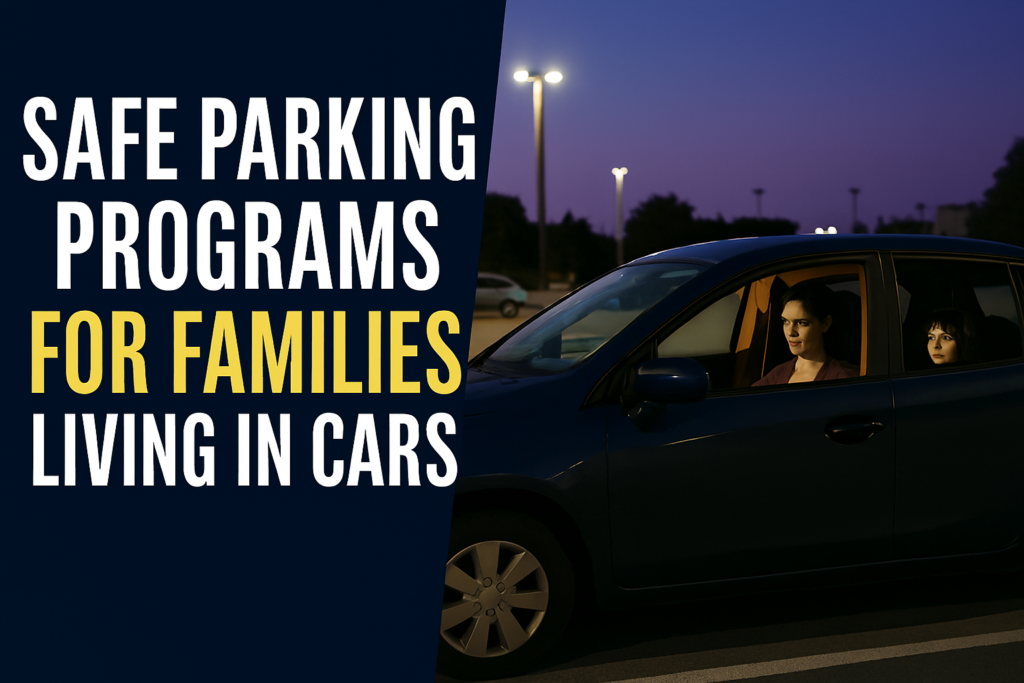
For many families facing homelessness, a car becomes more than just a means of transportation: it becomes a temporary home. In the United States, thousands of families are living out of their vehicles due to rising rents, job loss, or emergencies. Safe Parking Programs (SPPs) have emerged as a compassionate and practical response to this growing crisis, offering safe, regulated places for people to park overnight while they access support services.
What Are Safe Parking Programs?
Safe Parking Programs are organized initiatives that allow people living in cars, vans, or RVs to park overnight in designated parking lots. These sites are run by nonprofit organizations, churches, and sometimes local governments.
Participants receive a permit to park legally and safely without fear of fines or harassment. Many programs also connect families with social services, housing resources, and employment assistance.
The goal is to provide stability and security while helping participants escape homelessness.
Why Families Turn to Safe Parking Programs
Families often end up in their cars due to sudden financial hardships, such as job loss, medical debt, or eviction. Living in a vehicle is sometimes the last step before becoming completely homeless.
However, parking on public streets or in commercial parking lots is unsafe and often illegal. Safe Parking Programs provide an organized and compassionate response. They offer families:
Security: Secure parking reduces the risk of theft, violence, or encounters with the police.
Sanitation: Access to restrooms, showers, and handwashing facilities promotes hygiene and dignity.
Privacy: Designated spaces allow families to maintain some control over their personal environment.
Support: Staff and volunteers often connect participants with social workers, housing counselors, and employment programs.
Essential Components of Effective Safe Parking Programs
A robust program combines the physical features of the site with social services. Key components:
Secure, well-lit, and fenced or guarded lot: The presence of security personnel deters crime and reassures participants.
Clear rules and admissions process: Simple eligibility guidelines reduce confusion. Typical guidelines include quiet hours, no fires, and no illicit substance use.
Access to restrooms and showers: Hygiene facilities are essential for family dignity and child well-being.
Garbage disposal and sanitation: Regular waste collection and portable toilets prevent health risks.
Case management and housing search: Active casework connects families with rental assistance, shelter placements, and affordable housing listings.
Partnerships with nonprofits, faith-based groups, and the government: Shared resources and referrals make programs viable.
Child safety policies: Child protection checks and school liaison support when needed.
Data collection and outcome tracking: Basic metrics (length of stay, housing referrals, exits to permanent housing) demonstrate impact and unlock funding.
Typical services offered (detailed)
In addition to safe parking, programs typically offer:
- Overnight permits and secure parking (often from early evening to early morning).
- Access to restrooms and showers through portable units, shared access to buildings, or mobile hygiene vans.
- Food support: meal programs, referrals to food pantries, or vouchers.
- Laundry access: collaboration with self-service laundromats or mobile units.
- Phone charging and Wi-Fi access to facilitate job searches and benefits applications.
- In-person or mobile case management to complete housing applications, identify benefits, and manage services for children.
- Referrals to services for children: support with school enrollment, immunization records, free school meals.
- Employment assistance: resume assistance, transportation vouchers, childcare referrals.
- Behavioral health assistance and referrals to medical clinics.
Programs vary. Some operate solely as overnight parking; others operate as full-service centers that resemble a low-cost shelter with specific vehicle accommodations.
Eligibility Requirements
Eligibility varies by program and location, but common requirements include:
- Proof of a current driver’s license and vehicle registration
- The vehicle must be in good condition and insured
- Agreement to abide by program rules (no drugs, alcohol, or violence)
- Families often need to register in advance due to limited spaces.
- Some programs prioritize families with children, veterans, or recently displaced individuals.
How Families Find and Apply for Safe Parking Programs
If you live in a vehicle and need a safe parking space, follow these steps:
Call 211 (US) or your local social services helpline. They will provide emergency shelter and safe parking options.
Contact local shelters and nonprofit organizations that offer services to homeless people. Ask if they offer secure parking or information on safe parking.
Contact religious organizations (churches, mosques, temples). Many have active programs or host rotating sites.
Look for local homeless shelters, churches, or community organizations and ask if they are involved in or aware of a safe parking program in your area.
Check municipal websites for homeless response resources.
Use program directories: Some organizations maintain lists of safe parking programs, like the National Vehicle Residency Collective.
Prepare basic intake information: ID, vehicle registration, proof of children (if you have one), and a phone number. If you don’t have documents, inform the intake worker; many programs will help you.
Request case management: Programs that include social work will help enroll children in school and apply for housing resources.
Be persistent. Programs may have waiting lists. Ask to be placed on any waiting lists and request regular check-ins.
Practical Checklist for Families (What to Bring)
- Driver’s license or ID (if you have one)
- Vehicle registration and proof of insurance
- Children’s documents (birth certificates, school records), if you have them
- A phone or a means of receiving text messages/calls (some programs provide phone chargers or phones)
- Medications and a small first aid kit.
- A list of questions for intake (schedule, rules, access for case management).
Policy recommendations for expanding safe parking
To expand access to safe parking for families, cities and service providers should:
- Designate municipal parcels as pilot sites to reduce zoning barriers.
- Fund housing counselors to accompany case management in parking.
- Create flexible documentation rules to reduce barriers to entry for families without identification.
- Allocate recurring funds instead of annual grants for core staff.
- Forge partnerships with school districts to protect children’s school stability.
- Incentivize religious and private landowners to offer spaces by offering liability protection and small grants.
- Prioritize family spaces and tailor services to children’s needs (e.g., quiet hours, child safety plans).
These steps reduce implementation friction and improve outcomes for families.
Limitations: What safe parking cannot achieve on its own.
Safe parking provides safety, not permanent housing. Without affordable housing, rental assistance, or systemic investments, families will continue to resort to temporary solutions. Safe parking must be accompanied by concrete pathways to housing: rapid rehousing vouchers, subsidized housing placement, eviction prevention, and workforce support.
Final Thoughts
Safe Parking Programs offer hope to families with nowhere else to go but their car. They represent dignity, security, and a way forward in times of crisis. By supporting and expanding these programs, communities can ensure that no family has to choose between safety and survival.
