
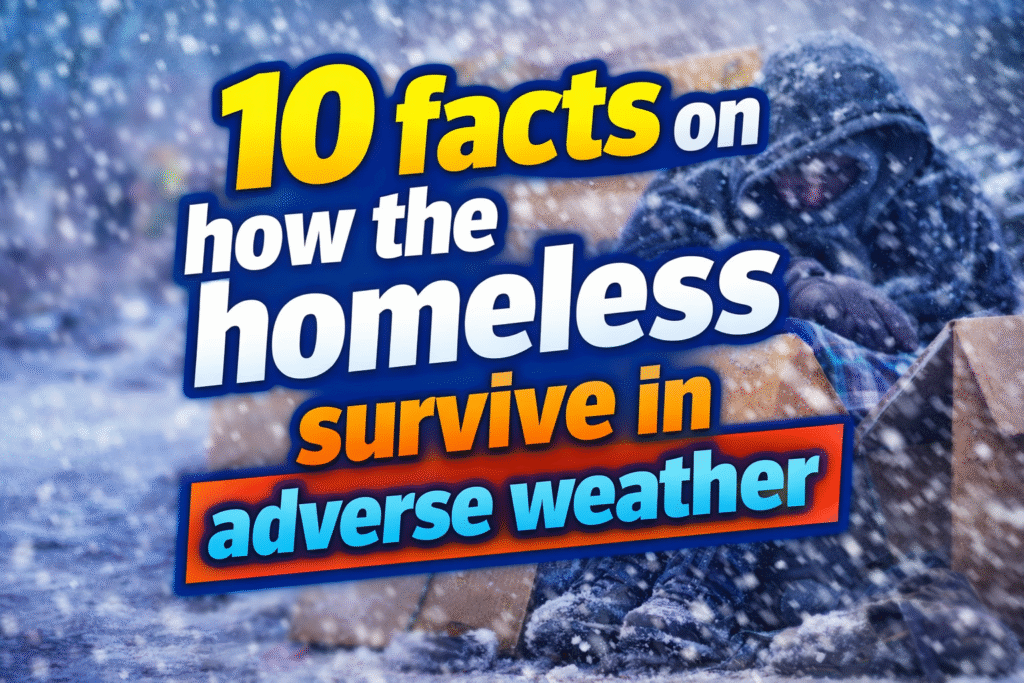
Living without stable shelter is hard in any season. During extreme weather—such as cold winters, heat waves, heavy rain, or storms—it becomes even more dangerous. People experiencing homelessness use many survival methods to stay alive and reduce risk. Below are 10 important facts that explain how homeless individuals survive in adverse weather conditions.
1. They Search for Any Form of Shelter
One of the first survival steps is finding shelter, even if it is temporary or unsafe. Homeless individuals often look for:
- Abandoned buildings
- Bus stations or train platforms
- Under bridges or overpasses
- Parking garages
- Tents made from tarps or plastic sheets
In cold weather, enclosed spaces help block wind. In hot weather, shaded areas help lower body temperature. These places are not ideal, but they can save lives.
2. They Layer Clothing to Control Body Temperature
Layering clothes is a key survival method. People often wear several layers at once, even in summer, because they may not know when they will get more clothing.
- In winter, layers trap body heat
- In rain, plastic bags or ponchos block moisture
- In heat, loose and light layers protect skin from sunburn
Many clothes come from donations, shelters, or discarded items.
3. They Use Cardboard, Blankets, and Plastic for Insulation
Cardboard is one of the most commonly used survival tools.
- It blocks cold from the ground
- It reduces heat loss
- It provides a barrier against damp surfaces
Blankets, sleeping bags, and plastic sheets are also used to stay warm and dry. Even newspapers are sometimes stuffed inside clothes for insulation.
4. They Move Frequently to Stay Safe
In extreme weather, staying in one place can be dangerous. Many homeless people move often to:
- Follow shade during heat waves
- Avoid flooding during storms
- Escape extreme cold or wind
- Avoid being forced to leave an area
Constant movement helps them adapt to changing conditions but also causes exhaustion.
5. They Depend on Community Resources
Survival often depends on help from the community. Homeless individuals rely on:
- Warming centers in winter
- Cooling centers during heat waves
- Emergency shelters
- Soup kitchens and food pantries
- Churches and charities
During severe weather, outreach teams may distribute water, blankets, coats, or hygiene supplies.
6. They Learn Weather Patterns and Warning Signs
Many homeless people become very aware of weather changes. They learn to:
- Read the sky for storms
- Notice temperature drops at night
- Follow weather alerts when possible
- Prepare early before conditions worsen
This knowledge helps them plan where to sleep and when to move.
7. They Share Information With Each Other
Homeless communities often share survival information, such as:
- Where shelters are open
- Which places are safer in storms
- Where food or warm clothing is available
- When police or cleanup crews are active
This shared knowledge helps protect each other, especially during dangerous weather.
8. They Face Serious Health Risks Despite Survival Efforts
Even with survival strategies, adverse weather causes major health risks, including:
- Hypothermia in cold weather
- Heat exhaustion and heat stroke
- Frostbite
- Dehydration
- Respiratory infections
Lack of medical care makes these conditions more dangerous and sometimes fatal.
9. They Use Public Spaces Carefully
Public places like libraries, hospitals, and transit stations are often used during extreme weather.
- Libraries provide warmth or air conditioning
- Hospitals offer emergency care
- Bus stations offer temporary protection
However, access is limited, and many people are asked to leave after short periods.
10. Survival Is About Endurance, Not Comfort
Surviving adverse weather is not about comfort—it is about staying alive. Each day requires:
- Constant problem-solving
- Physical endurance
- Mental strength
- Adaptation to harsh conditions
Many homeless individuals live in a constant state of survival, especially during extreme weather events.
Final Thoughts
Adverse weather makes homelessness far more dangerous. While people experiencing homelessness use many strategies to survive, these methods are not enough to guarantee safety. Access to stable shelter, healthcare, and support services remains critical.
Understanding how homeless individuals survive extreme weather helps build awareness, compassion, and the need for stronger community support systems.
