
Families in crisis often face overlapping challenges: lack of income, unstable housing, health issues, job loss, or emergencies that disrupt daily life. One major barrier that can lock families into hardship is transportation. Without reliable transit options—such as a car, bus access, or funds for travel—families can lose work opportunities, miss medical care, struggle to reach childcare, or fail to connect with vital services.
Transportation assistance programs aim to remove these barriers. They provide rides, financial help, vehicles, or community transit services to help families stabilize and move toward greater independence.
Why Transportation Assistance Matters
Transportation affects nearly every aspect of a family’s life:
- Employment: Without reliable transit, parents may struggle to reach interviews or maintain steady work.
- Health care: Families in crisis often need regular medical visits. Transportation hurdles reduce access to care and worsen health outcomes.
- Education & Skills Training: Transportation gaps limit access to schools, vocational training, and certification programs.
- Emergency & Social Services: Crisis support programs require travel to agency offices, shelters, or legal appointments.
In short, transportation is not just about mobility—it’s about opportunity and stability.
Types of Transportation Assistance Programs
Assistance programs vary widely, but most fall into a few broad categories:
1. Non-Emergency Medical Transportation (NEMT)
Many countries and states provide non-emergency medical transportation for families and individuals who cannot otherwise reach medical appointments. In the United States, for example, Medicaid Non-Emergency Medical Transportation (NEMT) is a federally required benefit for eligible enrollees. It covers rides to medical, dental, or therapy appointments and can include reimbursed public transit or gas mileage.
2. Financial Aid for Transit Costs
Several programs give families cash support or vouchers for travel expenses:
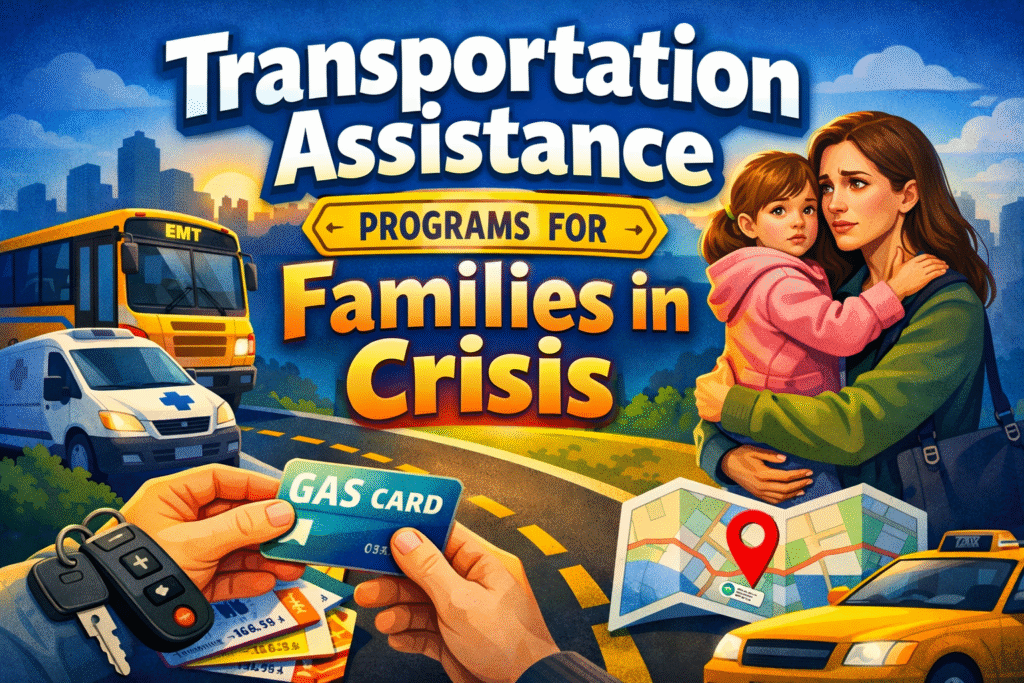
- Gas cards, bus passes, taxi vouchers: Community organizations or local charities often distribute transportation funds to help families get to work, school, or appointments.
- Charity bus tickets: Some nonprofits, including church-based groups, offer bus tokens or prepaid passes for low-income individuals.
3. Vehicle Access Programs
Some initiatives help families obtain a reliable car—a major step toward independence:
- Used vehicle programs: State or local government programs may provide donated or low-cost vehicles to eligible families, with support from nonprofits focused on long-term stability.
- Car repair/maintenance support: Organizations like The Lift Garage offer reduced-cost repairs and car-care help to keep vehicles running.
4. Direct Ride Services
Programs may coordinate or provide direct transportation for:
- Medical appointments
- Job interviews
- Education and training
- Shelter or community services
For example, shelters and safe houses often offer their own transport support or connect families to reliable community partners.
5. Case-Managed Transportation Support
Some social services include one-on-one support to help families plan transit—connecting them to public transit, volunteer drivers, or nonprofit transport networks that match the family’s needs.
Government-Funded Transportation Assistance Programs
Temporary Assistance for Needy Families (TANF) Transportation Support
TANF is a cornerstone program that provides transportation stipends, gas vouchers, bus passes, and mileage reimbursements to eligible low-income families. Transportation aid is often embedded within employment and family stabilization services, helping parents reach job interviews, training centers, and childcare facilities.
Key benefits include:
- Monthly public transit passes
- Reimbursement for work-related travel
- Emergency transportation grants
Eligibility is income-based and varies by state, but families in crisis are often prioritized.
Medicaid Non-Emergency Medical Transportation (NEMT)
For families facing health-related crises, Medicaid NEMT services are indispensable. This program ensures that Medicaid beneficiaries can attend medical appointments even without personal transportation.
Covered services include:
- Rides to hospitals, clinics, and pharmacies
- Wheelchair-accessible vehicles
- Mileage reimbursement for family drivers
NEMT is especially critical for families with children, elderly dependents, or members with disabilities.
Supplemental Nutrition Assistance Program Employment & Training (SNAP E&T)
SNAP E&T programs frequently include transportation assistance to support participants in job training or employment activities. Families experiencing food insecurity often qualify and can access bus passes, fuel cards, and ride reimbursements linked directly to workforce participation.
Nonprofit and Charitable Transportation Assistance Programs
Salvation Army Transportation Aid
The Salvation Army operates community-based assistance programs that provide emergency bus tickets, gas vouchers, and rideshare credits for families in immediate crisis. Assistance is typically coordinated through local centers and tailored to urgent needs such as shelter access, court appearances, or medical visits.
Catholic Charities Transportation Services
Catholic Charities delivers transportation relief for families facing eviction, domestic violence, or sudden displacement. Programs often include:
- Free transit passes
- Volunteer-driven ride services
- Relocation transportation assistance
Support is confidential and focused on restoring family stability.
United Way 211 Transportation Resources
By dialing 211, families can access real-time information on local transportation assistance programs. United Way partners with nonprofits, transit authorities, and emergency services to connect families with:
- Free shuttle programs
- Crisis travel funds
- Community ride networks
This service is available nationwide and operates 24/7 in many regions.
Transportation Support for Homeless and At-Risk Families
Continuum of Care (CoC) Program Mobility Assistance
Families experiencing homelessness often qualify for transportation assistance through CoC-funded agencies. These programs help families reach shelters, transitional housing, employment services, and schools.
Services may include:
- Bus and train passes
- Transport to housing placements
- School transportation for children
School-Based Transportation Protections
Under federal education protections, children experiencing homelessness are entitled to school transportation services, even if they are temporarily residing outside their original school district. This ensures educational continuity during family crises.
Emergency Transportation for Domestic Violence Survivors
Families escaping domestic violence face urgent transportation needs. Specialized programs provide safe, confidential travel assistance to help survivors and children reach shelters, legal services, and secure housing.
Common forms of aid include:
- One-way or round-trip bus and train tickets
- Ride-hailing credits
- Long-distance relocation travel
These services are often coordinated through domestic violence hotlines and advocacy organizations.
Transportation Assistance for Employment and Economic Recovery
Workforce Development Transportation Grants
Local workforce agencies frequently offer transportation subsidies to help families re-enter the workforce after a crisis. These supports reduce job loss risk and promote long-term self-sufficiency.
Benefits may include:
- Monthly transit passes
- Fuel reimbursements
- Vehicle repair assistance
Vehicle Donation and Low-Cost Auto Programs
Some nonprofit organizations provide donated vehicles or low-interest auto loans to families in crisis who demonstrate employment readiness. These programs often include financial counseling and insurance support to ensure sustainability.
Rural Transportation Assistance Programs
Families in rural areas face unique transportation challenges. Rural transit initiatives provide:
- Demand-response shuttle services
- Volunteer driver programs
- Mileage reimbursement for medical and employment travel
These programs are critical where public transit infrastructure is limited or nonexistent.
How Families Can Access Transportation Assistance
Here are practical steps families in crisis can take:
- Contact Local Social Services or 2-1-1: A simple phone call can connect you to a full listing of transportation resources in your area.
- Check Eligibility for Public Benefits: Programs like Medicaid include transportation benefits if you qualify.
- Reach Out to Community Organizations: Visit or call local nonprofits, shelters, churches, and community action agencies to ask about transit support.
- Talk with Case Managers or Social Workers: They often have up-to-date information on available transit funds or ride programs tailored to your circumstances.
- Explore Transit Pass Programs: Many public transit systems or nonprofit partners offer reduced-fare or free passes for low income riders.
Conclusion
Transportation assistance programs play a vital role for families facing crisis—whether that means losing a job, coping with medical issues, fleeing unsafe situations, or trying to secure stable housing. By providing rides, financial support, transit passes, or vehicles, these programs remove barriers that might otherwise prevent families from accessing essential services and opportunities.
If you or a family you support are struggling to get where you need to go, start locally with your social service agency, 2-1-1 hotline, or community nonprofits. From short-term transit vouchers to long-term support, there are multiple pathways to help.
