
Mental health support in the U.S. is delivered through a mix of public insurance, government-funded clinics, and nonprofit programs. These systems are designed to ensure that people without money or insurance can still receive therapy, medication, and crisis support.
Many of these services either cost nothing or adjust fees based on income, making them accessible even to people living below the poverty line.
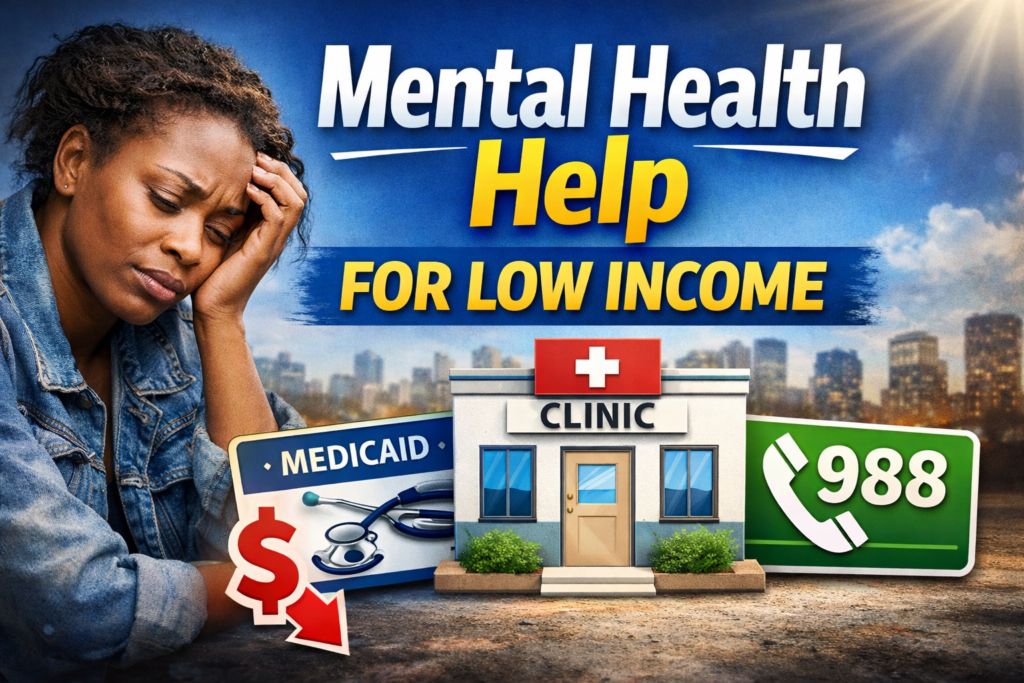
Medicaid: The Main Program for Low-Income Mental Health Care
The largest and most important source of mental health coverage for low-income Americans is Medicaid.
Medicaid is a joint federal and state program that provides free or very low-cost health insurance, including mental health treatment. It plays a major role in supporting people with conditions such as depression, anxiety, bipolar disorder, and substance use disorders.
Under Medicaid, individuals can receive a wide range of services, including:
- Therapy (individual and group counseling)
- Psychiatric evaluations and medication
- Inpatient and outpatient treatment
- Case management and community-based support
These services are often fully covered, meaning patients pay little or nothing out of pocket.
To explore eligibility or apply, visit:
Because each state manages its own Medicaid program, the exact benefits and eligibility rules may vary. However, Medicaid remains the primary pathway to free mental health care for low-income individuals across the country.
Free and Low-Cost Treatment Through SAMHSA Programs
The Substance Abuse and Mental Health Services Administration (SAMHSA) is a federal agency that connects people to affordable mental health services.
SAMHSA confirms that even without insurance, individuals can still access help through:
- Free treatment programs
- Sliding-scale therapists (cost based on income)
- State-funded mental health services
- Support groups and community programs
You can find treatment near you using their official locator:
SAMHSA also operates a 24/7 helpline (1-800-662-HELP) that provides confidential guidance and referrals to local services.
This is one of the most reliable starting points if you do not know where to go.
Low-Cost and Free Care Options
Federally Qualified Health Centers (FQHCs): These centers provide primary and mental health care regardless of your ability to pay. Fees are based on a sliding scale according to your income. Use the HRSA Find a Health Center tool to locate one near you.
Community Mental Health Centers: Your local or county government often funds centers that provide therapy and psychiatric services for those with limited means. You can find these by calling 2-1-1 or visiting 211.org.
University Training Clinics: Graduate programs for psychology or social work often have clinics where supervised students provide therapy at deeply discounted rates.
Sliding Scale Therapists: Many private therapists reserve a few spots for clients who pay a reduced fee based on their income. Mention “sliding scale” when you first reach out to a provider.
Open Path Collective: A nonprofit network where therapists offer sessions for significantly reduced rates (typically $30–$70) for individuals in financial need.
Community Mental Health Centers: Local, Income-Based Care
Across the United States, community mental health centers provide essential care for low-income populations. These centers were created with federal funding to ensure mental health services are available in every community.
They offer:
- Therapy and counseling
- Medication management
- Crisis intervention
- Long-term treatment plans
Most importantly, they operate on a sliding fee scale, meaning the amount you pay depends on your income.
In many cases, services may be free for individuals with very low income or no insurance.
To locate a center in your state, you can use directories such as:
These centers are often the closest and most practical option for ongoing mental health support.
Federally Qualified Health Centers (FQHCs)
Another key resource is Federally Qualified Health Centers (FQHCs). These are government-funded clinics that provide both physical and mental health services.
FQHCs are required to:
- Serve all patients regardless of ability to pay
- Offer services on a sliding fee scale
- Provide integrated care, including mental health treatment
They are especially helpful for people who need both medical and mental health care in one place.
To find a nearby clinic, visit:
These clinics are widely available across urban and rural areas.
Crisis Support and Immediate Help
For urgent mental health support, the U.S. provides free crisis services that are available nationwide.
The most important is the 988 Suicide & Crisis Lifeline, which offers:
- 24/7 free support
- Phone, chat, and text options
- Immediate connection to trained counselors
This service is available to anyone, regardless of income or insurance status.
In addition, many states offer local crisis lines and emergency mental health services through Medicaid or public health departments.
Sliding-Scale Therapy and Nonprofit Support
For people who do not qualify for Medicaid but still cannot afford full-price therapy, many providers offer sliding-scale fees.
This means:
- The cost is adjusted based on your income
- Sessions may cost significantly less than standard rates
- Some nonprofit programs offer subsidized care
SAMHSA confirms that many therapists, clinics, and hospitals provide these reduced-cost options or financial assistance programs.
These options help fill the gap for individuals who fall just above Medicaid eligibility but still struggle financially.
Why These Programs Matter
Mental health conditions are more common among low-income populations, yet access to care is often limited by cost and availability.
Programs like Medicaid, community health centers, and federal initiatives are designed to close this gap by:
- Reducing or eliminating treatment costs
- Expanding access to local care
- Providing long-term support for serious conditions
Even so, barriers such as provider shortages and long wait times still exist in many areas.
Final Thoughts
Mental health help for low-income individuals in the United States is available through structured, official systems. Programs like Medicaid, SAMHSA services, community mental health centers, and federally funded clinics create a safety net for people who cannot afford private care.
The most effective way to get help is to start with government-backed resources, then explore local clinics and nonprofit programs for ongoing support.
