
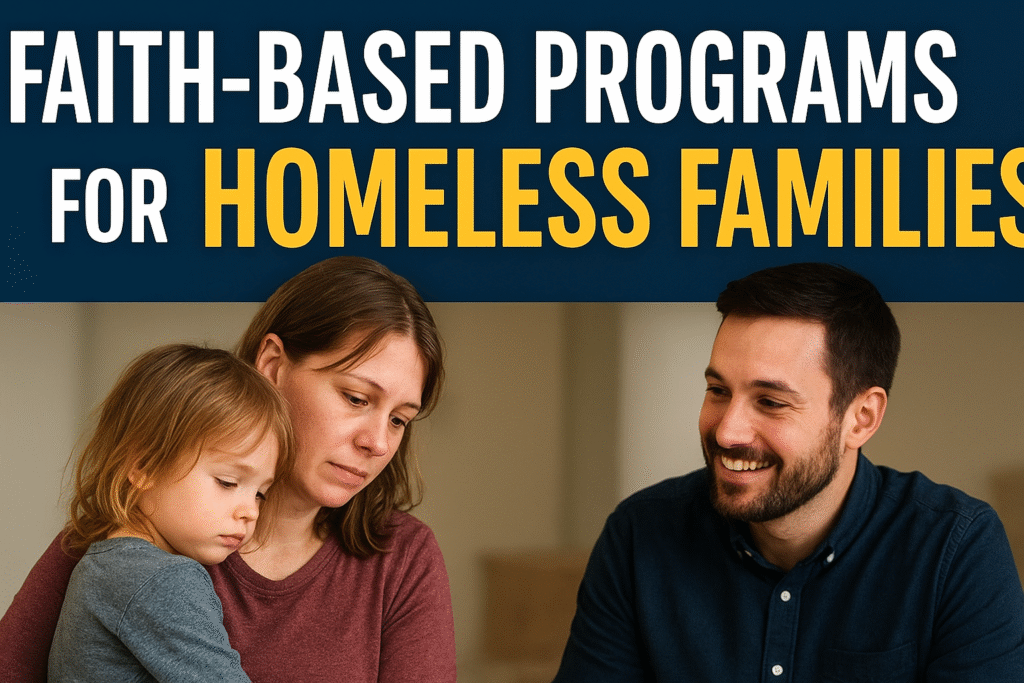
Faith-based programs. For a long time, they have been a vital source of support for homeless families across the United States. Based on compassion, spiritual values, and community service, these programs provide food, shelter, therapy, and long-term housing assistance. Many families turn to churches, mosques, synagogues, and religious nonprofit organizations not only for help but also for hope during difficult times.
This guide explains what religious programs offer, who is eligible, how to find them, and how to apply for support.
List of Faith-Based Programs for Homeless Families Near You
While availability varies by location, the following national and local faith-based organizations commonly assist homeless families:
The Salvation Army
The Salvation Army operates one of the largest networks of religious shelter programs for families experiencing homelessness. Its family centers offer safe rooms for parents with children, daily meals, hygiene items, and structured case management. Many centers also operate rapid rehousing programs that help families move into apartments with rental assistance, budget support, and job counseling. Their approach combines practical help with compassionate care, ensuring families receive both short-term relief and long-term stability.
Catholic Charities
Catholic Charities offers a wide range of housing assistance for families experiencing homelessness. Through its national network of diocesan agencies, Catholic Charities provides emergency shelter, transitional housing, eviction prevention support, and security deposit assistance. Families also receive counseling, childcare referrals, job placement guidance, and connections to permanent housing resources. The organization focuses on restoring stability through comprehensive services that follow a parent- and child-centered model.
Society of St. Vincent de Paul
The Society of St. Vincent de Paul supports homeless families through parish programs that provide practical assistance, such as rental support, help with utilities, clothing, food, and emergency shelter. Many local councils run family shelters or partner with nearby churches to create safe housing options. Volunteers often make home visits to understand each family’s situation and provide personalized support based on compassion and community responsibility.
Lutheran Social Services
Lutheran Social Services offers shelter and housing programs focused on keeping families together. Their faith-based approach includes emergency shelter, long-term transitional housing, and supported permanent housing for families facing long-term barriers. Parents receive case management, referrals to mental health services, life skills guidance, and job readiness training. The goal is to help families break the cycle of homelessness through structured support and planning for stability.
United Methodist Church
The United Methodist Church is involved in assisting homeless families through local congregations and affiliated ministries. Many churches implement small-scale programs, such as motel voucher assistance, short-term emergency housing, food banks, and volunteer-run meal programs. Some regional Methodist ministries operate larger shelters and transitional housing designed for families who need several months of structured support before securing permanent housing.
Family Promise
Family Promise is a well-known interfaith program focused exclusively on assisting homeless families. The model involves rotating families among different host congregations that provide them with shelter, meals, and emotional support. During the day, families attend a resource center where staff help them find employment, save money, and secure permanent housing. The program emphasizes dignity, community involvement, and long-term financial stability.
Jewish Family Service
The Jewish Family Service network offers housing support based on the values of community care and dignity. Many locations operate family shelters, rental assistance programs, food banks, counseling services, and case management for parents and children. Their programs help families stabilize quickly by addressing emotional, financial, and practical needs with a supportive, nonjudgmental approach.
Catholic Worker Houses
Catholic Worker Houses, run by small religious communities, offer a home-like environment to families experiencing homelessness. These houses provide food, clothing, and temporary shelter without bureaucracy or complex eligibility requirements. They focus on hospitality, safety, and compassion. Families typically receive personalized guidance, emotional support, and connections to local rental or employment resources that help them find stable housing.
The Episcopal Church
The Episcopal Church supports families experiencing homelessness through parish outreach programs, winter shelters, soup kitchens, and transitional housing ministries. Many local Episcopal organizations collaborate with city agencies, nonprofits, and other churches to expand their reach. Parents can receive emergency financial assistance, case management, and referrals to permanent housing and employment resources.
Church of the Nazarene
The Church of the Nazarene offers family support through its network of compassionate ministries. In many communities, Nazarene centers operate food programs, partnerships with shelters, crisis housing, and rental assistance services. Families receive faith-based support focused on practical help and long-term recovery from homelessness.
How to Find Faith-Based Programs for Homeless Families
Finding faith-based programs in your area is easier than many people think. Here are the most effective ways:
1. Use Online Search Engines
Search with keywords like:
- “Faith-based shelters near me”
- “Church help for homeless families near me”
- “Christian/Muslim/Jewish homeless programs in [your city]”
2. Call 211 Helpline
Dial 211 to connect with a local operator who can provide:
- Locations of shelters
- Church-based food programs
- Transitional housing listings
3. Visit Local Churches, Mosques, or Temples
Most religious centers keep contact lists of nearby:
- Shelters
- Food pantries
- Family assistance programs
Even if they don’t run a shelter themselves, they can guide you to one.
4. Use Online Directories
Helpful sites include:
- FindHelp.org
- HomelessShelterDirectory.org
- AuntBertha.com
- CatholicCharitiesUSA.org
5. Contact Social Service Agencies
Local nonprofits often collaborate with churches and can connect you to available programs.
Who is Eligible for Faith-Based Programs for the Homeless?
Eligibility varies by organization, but most faith-based programs have low barriers and accept families in urgent need.
Typical eligibility criteria include:
✔ Families experiencing homelessness or at risk of homelessness
Includes those staying in cars, motels, shelters, or couch-surfing.
✔ Low- or no-income households
Families struggling with bills or unable to pay rent.
✔ Single mothers, single fathers, and two-parent families
Most programs welcome all family types.
✔ Immigrants and undocumented individuals
Many faith-based programs do not require legal status or social security numbers.
✔ Willingness to participate in case management
Some transitional programs require meeting with a caseworker regularly.
❌ Religious participation is NOT required
Faith-based programs serve all families regardless of beliefs, religion, or background.
How to Apply for Faith-Based Programs for the Homeless
Applying for assistance is usually simple. Here is the typical process:
1. Contact the Program
Reach out by phone, email, or walk-in. Many programs accept emergency intakes 24/7.
2. Complete an Intake Interview
You may be asked basic questions about:
- Your housing situation
- Family size
- Income or employment status
- Immediate needs
3. Provide Minimal Documentation
Some programs may ask for:
- ID (if available)
- Birth certificates for children
- Proof of homelessness (a letter from a shelter, landlord, or caseworker)
If you don’t have documents, many faith-based programs will still help.
4. Get Placed in a Program
Depending on availability, you may receive:
- Emergency shelter the same day
- A referral to another center
- Placement on a waiting list for transitional housing
5. Participate in Supportive Services
Once accepted, families may receive:
- Housing assistance
- Counseling
- Employment help
- Transportation support
- Childcare services
Final Thoughts
Faith-based programs offer more than temporary help—they provide stability, encouragement, and a supportive community for homeless families. Whether you need emergency shelter, meals, or a path toward long-term housing, religious organizations can be an excellent resource.
