
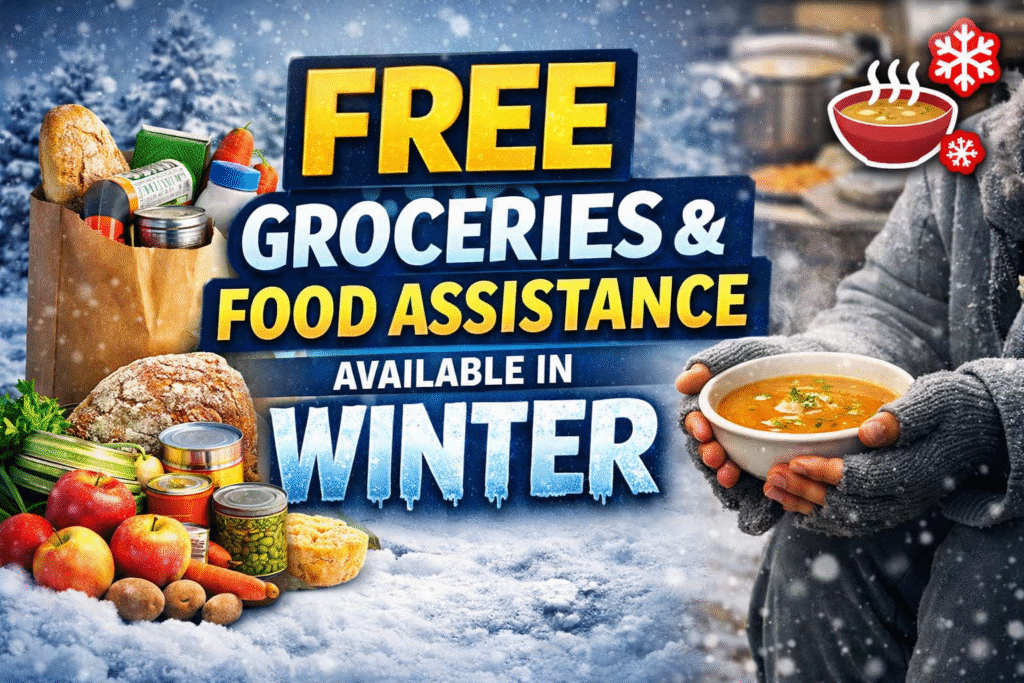
Winter can be one of the hardest times of the year for families and individuals with limited income. Cold weather often brings higher heating bills, job slowdowns, and unexpected expenses. When money runs short, food is often the first thing people struggle to afford. To prevent hunger during the cold months, many free grocery and food aid programs operate across the United States.
Government Programs Offering Free Groceries in Winter
SNAP Benefits and Seasonal Adjustments
The Supplemental Nutrition Assistance Program (SNAP) is one of the largest sources of free groceries and food aid available in winter. SNAP benefits are loaded monthly onto an EBT card and can be used at grocery stores and farmers’ markets.
During winter:
- Emergency allotments may increase benefits
- Cold-weather utility costs can raise eligibility
- Special disaster SNAP may be activated
Apply through your state’s social services office or online portal.
WIC Support for Families and Infants
The Women, Infants, and Children (WIC) program supports pregnant women, new mothers, and young children. It provides free groceries like milk, cereal, fruits, vegetables, and baby food.
In winter, WIC clinics often:
- Extend appointment flexibility
- Offer remote certifications
- Increase nutrition education support
This ensures families stay nourished even in harsh weather.
TEFAP Emergency Food Distribution
The Emergency Food Assistance Program (TEFAP) supplies free groceries to food banks and pantries nationwide. Winter distributions often increase to meet higher demand.
TEFAP foods may include:
- Canned vegetables and fruits
- Frozen meats
- Dairy products
- Shelf-stable grains
Local food banks usually handle distribution.
For official information, visit the USDA page:
👉 https://www.usda.gov/tefap
Local Food Banks and Pantries in Winter
How Food Pantries Expand Winter Services
Food banks know winter is tough, so many expand hours and services. Free groceries and food aid available in winter often come in larger quantities to help families last longer.
Winter pantry benefits may include:
- Extra holiday food boxes
- Fresh produce and protein
- Ready-to-eat meals
Most food pantries don’t require proof of income, making access easier.
Mobile Food Pantries and Delivery Options
Snow and cold can limit travel. That’s why many organizations offer:
- Mobile food pantry trucks
- Home delivery for seniors
- Community pop-up distribution sites
These services ensure free groceries and food aid available in winter reach people who can’t travel.
Free Groceries from Churches and Faith-Based Groups
Church Food Drives and Winter Meal Boxes
Churches play a huge role in winter food assistance. Many host weekly or monthly food pantries, especially during the cold season.
Church-based aid often includes:
- Winter meal boxes
- Fresh bread and produce
- Holiday grocery bags
You don’t usually need to be a member to receive help.
Holiday and Cold-Weather Outreach Programs
During Thanksgiving, Christmas, and New Year’s, churches and faith groups increase outreach. Free groceries and food aid available in winter often peak during these times.
Programs may include:
- Community dinners
- Grocery gift cards
- Emergency food vouchers
Check local church websites or call community centers for schedules.
Community and Nonprofit Winter Food Aid Programs
Senior-Focused Food Assistance
Seniors are especially vulnerable in winter. Many nonprofits focus on senior nutrition with:
- Home-delivered meals
- Senior food boxes
- Congregate winter meals
Programs like Meals on Wheels often increase services during cold months.
School and Youth Winter Meal Programs
When schools close for winter break, children may lose access to free meals. To fix this, communities offer:
- Winter break meal programs
- Backpack food programs
- Youth-centered food pantries
These ensure kids don’t go hungry while school is out.
How to Apply for Free Groceries and Food Aid in Winter
Required Documents and Eligibility
While requirements vary, you may need:
- ID or proof of residence
- Income information (sometimes optional)
- Household size details
Many programs prioritize speed over paperwork during winter emergencies.
Tips to Get Help Faster
To access free groceries and food aid available in winter quickly:
- Call 211 for local resources
- Visit food banks early in the day
- Ask about multiple programs at once
- Don’t wait until food runs out
Help is more available than many people realize.
Frequently Asked Questions (FAQs)
1. Who qualifies for free groceries and food aid available in winter?
Most programs serve low-income households, seniors, families with children, and people facing temporary hardship. Many food pantries have no income requirements.
2. Can I receive food assistance even if I’m working?
Yes. Many working families still qualify for free groceries and food aid available in winter due to high living costs.
3. Are winter food programs available for seniors only?
No. While seniors have special programs, food aid is available for individuals and families of all ages.
4. How often can I visit a food pantry in winter?
It depends on the pantry. Some allow weekly visits, while others are monthly.
5. Do I need to apply online for winter food assistance?
Some programs require applications, but many food pantries operate on a walk-in basis.
6. Can I receive multiple types of food aid at once?
Yes. You can often receive SNAP benefits, pantry food, and church groceries at the same time.
Conclusion
Winter doesn’t have to mean going hungry. Free groceries and food aid available in winter provide essential support when families need it most. From government programs like SNAP and WIC to local food banks, churches, and nonprofits, help is widely available.
