
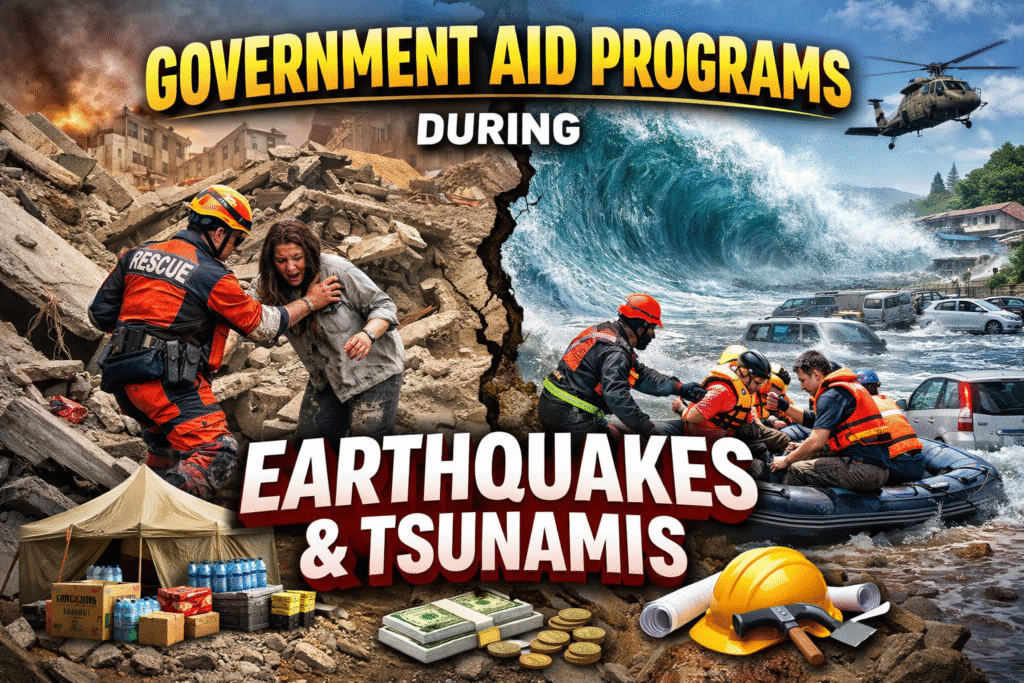
Government aid programs for earthquakes and tsunamis in the United States are primarily managed by federal agencies through the National Earthquake Hazards Reduction Program (NEHRP) and the National Tsunami Hazard Mitigation Program (NTHMP).
Individual and Household Assistance
If a disaster is Presidentially declared, individuals can access various types of support:
- Individuals and Households Program (IHP): Provides financial help or direct services for housing repairs, temporary lodging, and other serious needs (e.g., medical, dental, or funeral expenses) not covered by insurance.
- Disaster Unemployment Assistance: Offers short-term income for those who lost their jobs as a direct result of the disaster.
- SBA Disaster Loans: The Small Business Administration (SBA) provides low-interest loans to homeowners and renters to repair or replace damaged property and belongings.
- D-SNAP: Provides emergency food assistance via the Disaster Supplemental Nutrition Assistance Program.
- Crisis Counseling: Funding for short-term mental health services and community outreach for survivors.
Assistance for Governments and Non-Profits
Federal programs help state and local entities recover and prepare for future events:
- FEMA Public Assistance: Grants to state, tribal, and local governments to cover costs for debris removal, life-saving emergency measures, and restoring public infrastructure.
- NEHRP State Assistance Grant Program: Provides funding to states with high seismic risk for activities like updating building codes, seismic safety inspections of critical lifelines, and earthquake education.
- Hazard Mitigation Grant Program (HMGP): Funds long-term measures to reduce risk to life and property from future disasters, such as seismic retrofitting for buildings.
- Tsunami Financial Assistance: NOAA/NWS grants support coastal states and tribes in developing inundation maps, evacuation plans, and community education.
Key Coordinating Agencies
- FEMA: Leads government-wide response and recovery efforts and manages most disaster-related grants.
- USGS: Provides earthquake monitoring, rapid reporting through the National Earthquake Information Center (NEIC), and hazard assessments.
- NOAA: Operates the U.S. Tsunami Warning System and leads tsunami preparedness through programs like TsunamiReady®.
- NIST: Serves as the lead agency for NEHRP, focusing on research to improve earthquake-resistant design in building codes.
Survivors can check for active declarations and apply for aid through DisasterAssistance.gov or by calling the FEMA Helpline at 1-800-621-3362.
What other programs help with earthquake-related recovery besides FEMA, SBA, and NOAA?
Beyond FEMA, the SBA, and NOAA, several federal departments provide specialized assistance for earthquake and tsunami recovery, particularly for housing, infrastructure, and rural needs.
1. Housing and Infrastructure Assistance
- HUD Community Development Block Grant Disaster Recovery (CDBG-DR): The Department of Housing and Urban Development (HUD) provides these flexible grants to help states and cities recover from major disasters, focusing on housing, infrastructure, and economic revitalization in low-income areas.
- Department of Transportation (DOT) Emergency Relief (ER) Program: This program specifically funds the repair or reconstruction of federal-aid highways and roads on federal lands damaged by natural disasters like earthquakes.
- U.S. Army Corps of Engineers (USACE): Provides emergency assistance to repair damaged flood control works (e.g., levees) and federally constructed shore protection projects.
2. Rural and Agricultural Support (USDA)
The U.S. Department of Agriculture (USDA) offers a wide range of programs for rural communities and the agricultural sector:
- Emergency Community Water Assistance Grants (ECWAG): Assists rural communities that have experienced a significant decline in drinking water quality or quantity due to incidents like earthquakes.
- Supplemental Disaster Relief Program (SDRP): Applications are open through April 30, 2026, for producers who suffered crop or tree losses due to natural disasters in 2023–2024.
- Single Family Housing Rural Disaster Home Repair Grants: Helps low-income rural homeowners repair damage from natural disasters.
- Livestock Indemnity Program (LIP): Provides payments to livestock producers for animal deaths in excess of normal mortality caused by adverse weather or disasters.
3. Specialized Recovery Services
- Disaster Legal Services (DLS): Provided through a partnership with the Young Lawyers Division of the American Bar Association, this program offers free legal help for insurance claims, home repair contracts, and replacement of legal papers.
- Economic Development Administration (EDA): Offers Economic Adjustment Assistance (EAA) grants to support long-term economic recovery planning and infrastructure restoration in disaster-affected regions.
- Department of Labor (DOL): Manages Disaster Unemployment Assistance (DUA) and provides grants for temporary “clean-up” jobs for those dislocated by a disaster.
- Internal Revenue Service (IRS): Provides special tax law provisions, such as casualty loss deductions, to help individuals and businesses recover financially.
4. Scientific and Preparedness Research
- U.S. Geological Survey (USGS): While largely scientific, the USGS Earthquake Hazards Program offers research grants (soliciting for FY 2026 as of early 2025) to improve seismic hazard assessments and reporting.
- National Science Foundation (NSF): Funds interdisciplinary research on hazard mitigation and societal resilience through programs like Hazards SEES.
Frequently Asked Questions (FAQs)
1. What are government aid programs during earthquakes and tsunamis?
They are official programs that provide emergency relief, financial assistance, housing, healthcare, and rebuilding support after disasters.
2. Who is eligible for government disaster aid?
Eligibility usually includes residents, citizens, and sometimes businesses affected by the disaster, depending on national policies.
3. How fast does government aid arrive after a disaster?
Emergency aid often begins within hours or days, while financial and housing assistance may take longer.
4. Do I have to repay disaster assistance funds?
Grants typically don’t require repayment, but loans may need to be repaid under agreed terms.
5. Can renters receive government aid programs during earthquakes and tsunamis?
Yes, renters may qualify for temporary housing assistance, cash aid, and other support.
6. Are government aid programs enough for full recovery?
They provide essential support, but recovery often also involves NGOs, charities, and community efforts.
Conclusion
Government Aid Programs During Earthquakes and Tsunamis are essential for saving lives, restoring dignity, and rebuilding shattered communities. These programs provide a structured, reliable response when chaos strikes, ensuring no one faces disaster alone. While challenges remain, continued investment in preparedness and transparent aid delivery can make these programs even more effective in the future.
