
As Austria moves toward its ambitious climate goals, electric vehicles (EVs) play a pivotal role in decarbonizing transportation. To drive this transition, a robust, accessible, and widespread public charging network is essential. While government subsidies and incentives have laid the groundwork, non-governmental funding is becoming an increasingly important pillar for expanding EV charging infrastructure in Austria.
This article explores how private investors, utilities, companies, and public-private partnerships are stepping up their efforts to finance, install, and operate public EV charging stations across Austria.
Austria’s EV Ambitions and the Need for Private Investment
Austria aims to be climate-neutral by 2040, with the decarbonization of transport a key area. As the adoption of electric vehicles accelerates (more than 20% of new cars sold in Austria are already electric or plug-in hybrids), the demand for reliable and convenient charging points is skyrocketing.
The Austrian government has supported this growth through incentives, such as subsidies for home chargers, grants for businesses, and funding for municipalities to install chargers. However, the scale of the required network far exceeds the capacity of public budgets.
Best Sources of Non-Governmental Funding
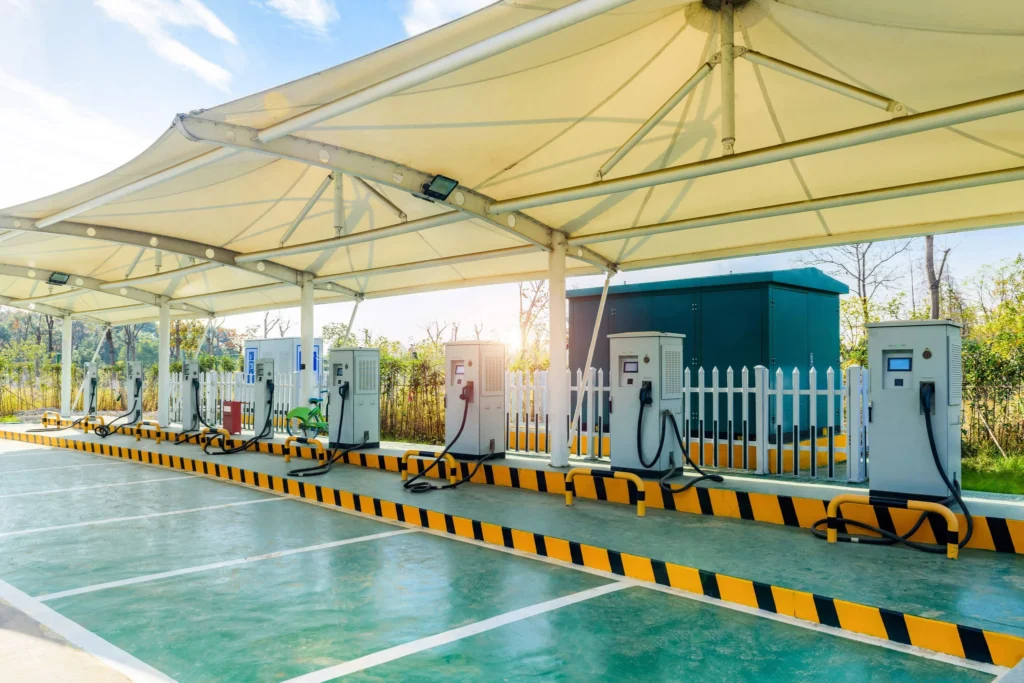
1. Utilities and Energy Suppliers
Austrian energy companies are among the largest non-government investors in public charging systems. Companies such as Verbund, Wien Energie, EVN, and TIWAG operate large networks of public chargers. They finance new installations as part of their clean energy strategies, viewing EV charging as a future source of revenue linked to renewable electricity.
These utilities often co-invest with local authorities or private property owners (e.g., shopping malls, hotels, parking lots) to install and maintain chargers on their premises.
2. Private Charging Networks and Operators
Companies specializing in charging infrastructure, such as SMATRICS, Ionity, and Allego, play a key role. SMATRICS, for example, is a joint venture between Verbund and Siemens that makes significant investments in high-speed charging corridors in Austria and neighboring countries.
Ionity, backed by major automakers (BMW, Ford, Hyundai, VW Group), focuses on ultra-fast charging stations along major motorways and expressways, co-financing installations with service station operators.
3. Commercial Real Estate Developers
Private property owners and developers are increasingly investing in electric vehicle chargers to attract customers, tenants, or guests. Retail chains such as Spar, IKEA, and shopping centers often install public charging stations in their parking lots, funded in part by the companies themselves or through partnerships with charging networks.
These investments not only meet rising customer expectations but can also generate new revenue streams through parking or charging fees.
4. Car manufacturers and partnerships with the automotive industry
Many car brands fund charging infrastructure to support their electric vehicle customers and alleviate range anxiety. For example, Volkswagen’s stake in Ionity is helping to expand high-speed charging corridors in Austria. Tesla continues to expand its Supercharger network, which is now partially open to vehicles from other brands in Austria.
5. Public-Private Partnerships (PPPs)
Combining public support with private investment is a proven model in Austria. Municipalities can provide space, permits, or partial financing, while private companies handle installation, operation, and maintenance. This reduces costs for local governments and encourages greater deployment of chargers.
6. Green Investment Funds and Impact Investors
Private equity firms, green funds, and institutional investors are increasingly financing charging networks as part of their sustainable infrastructure portfolios. With EU climate goals and green finance incentives, electric vehicle infrastructure is seen as a low-risk, high-impact investment with long-term returns.
Examples of Non-Governmental Financing in Action
Wien Energie operates the largest charging network in Vienna, with more than 1,500 public charging points, co-financed with the city council, but also supported by its own investments and partnerships with supermarkets and parking garages.
SMATRICS EnBW is deploying ultra-fast chargers on Austrian motorways, with support from private capital and European cross-border initiatives.
IKEA Austria has installed free or low-cost chargers in its store parking lots, in collaboration with utility companies and charging operators.
Challenges and Opportunities
While non-governmental funding is accelerating growth, the following challenges remain:
Network capacity improvements: Many stores require network upgrades to handle high-power chargers, which can be costly.
Coordination: Aligning private investments with regional planning prevents oversupply in some areas and undersupply in others.
Profitability: Operators must balance low utilization rates in rural areas with higher demand in urban centers.
However, technological advances, the growing adoption of electric vehicles, and EU support frameworks make private investment increasingly attractive.
Conclusion
Austria’s transition to sustainable mobility depends not only on public subsidies but also on the critical role of non-governmental financing. Utilities, charging operators, automakers, retailers, and private investors are expanding the network faster and smarter than public financing alone could achieve.
This dynamic collaboration between government incentives and private capital is creating a robust, practical, and forward-thinking charging ecosystem, paving the way to a clean, electric future for Austria.
If you are a property owner, business, or investor in Austria, now is the time to explore the opportunities in public EV charging. The market is growing, demand is increasing, and the opportunity to contribute to the country’s green transition is clearer than ever.
